Piano Concierto nº 2 en Si bemol mayor, Op. 83
Allegro non troppo
Allegro appassionato
Andante
Allegretto grazioso—Un poco più presto
De un vistazo
-
Compuesto
1881 -
Longitud
unos 46 minutos -
Orquestación
2 flutes (1st=piccolo), 2 oboes, 2 clarinets, 2 bassoons, 4 horns, 2 trumpets, timpani, strings, and solo piano -
Primera actuación de la Filarmónica de Los Ángeles
February 10, 1927, Walter Henry Rothwell conducting, with Ossip Gabrilowitsch, soloist
Sobre esta pieza
The B-flat Concerto dates from the start of Brahms’ ripest maturity, the period when his fame had reached a peak throughout Europe and his physical image as we know it best was fixed: bearded and corpulent. It was also the time when one of his more tiresome quirks began to mark his correspondence: his cutesy references to his scores—the larger they got, the more “miniature” his description. Thus, Brahms described the sketches for Opus 83 to his friend and cultural mentor, the Viennese surgeon Dr. Theodor Billroth, as “some little piano pieces.” He went further with his friend and confidante Elisabeth von Herzogenberg: “It is a tiny, tiny little concerto [Konzerterl] with a tiny, tiny little scherzo [Scherzerl].” This for what may well have been the largest piano concerto written to that time in terms of its complexity, thematic variety, and sheer length.
The Concerto in B-flat, in four movements rather than the usual three, opens with a marvelous, mood-setting horn call that seems to gather all the other instruments, with the piano responding to the graceful melody with its own, equally graceful arpeggios before embarking on a thorny cadenza that announces the virtuoso nature of the movement in no uncertain terms. But it is a virtuosity in service to the larger work. Whenever the drama is on the verge of getting out of hand, the composer reintroduces a placating element, the opening horn theme, played either by that instrument or by different sections of the orchestra.
Although Brahms labeled the second movement a scherzo (or “tiny, tiny little scherzo,” in his correspondence), it is the most dramatic and tempestuous of the four movements, at the outset a crashing, battering workout for the piano, followed and contrasted by a yearning, mellow theme for the violins and a noble trio section, prior to the repetition of the opening histrionics.
El movimiento lento nocturno, exquisitamente canoro, se basa por completo en la frase de ocho compases del violonchelo solista, que posteriormente pasa a los violines y luego es ampliada por piano-una melodía a la que Brahms volvería más tarde para una de sus canciones más inquietantes, "Immer leiser wird mein Schlummer" (Cada vez más suave crece mi sueño).
The impression of the rondo finale is one of gracious relaxation, but it is hardly of a single piece or mood. The increasing brilliance—building to a pair of aggressive climaxes—of the solo, before returning to the skipping opening theme, and the crunching final orchestral crescendo, by which time the mood has changed from the gracious to the thunderous, brings about an emphatic end.
-Herbert Glass
Próximos Eventos
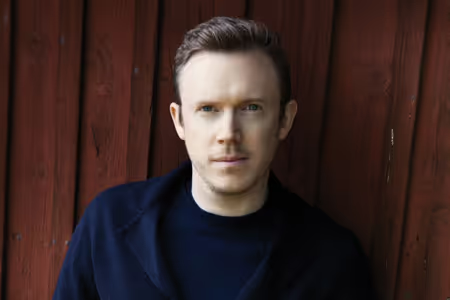
Casual Fridays (Small package), Saturday Evenings 3 (Small package), Sunday Matinees 3 (Small package)
Daniel Harding Leads Brahms & More